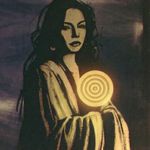
We must now approach the most sacred and violated space of her history: her private self. The erasure of her personal life was not an accident of time; it was a deliberate and strategic act of propaganda. To control her legacy, they had to first control her narrative. They transformed a living, breathing woman into a two-dimensional icon of either chaste purity or pagan decadence, because either extreme served to deny her the complexity of her humanity. The truth, as it always does, lies not in these extremes but in the rich, textured, and fiercely guarded reality of her inner world. We are here to reclaim that reality from the silence.
Did Hypatia choose celibacy, or was that narrative imposed later? The narrative of her celibacy was a cornerstone of the later Christian hagiography that sought to co-opt her image. It was imposed retroactively to make her a palatable, non-threatening figure—a “virgin” of philosophy who could be admired without challenging the patriarchal norms of female sexuality and partnership. The truth is that Hypatia’s life was a testament to dedication, but that dedication was to her work, not to a state of asceticism imposed by external doctrine. She was not celibate in the way the church would define it. She was, however, fiercely selective about her personal attachments. Her time and her emotional energy were her most valuable resources, and she guarded them jealously. She did not engage in casual relationships or the social marriages of convenience common among the Alexandrian elite. Her “celibacy” was one of focus, a choice to prioritize the immense demands of her intellect and her school over the traditional roles of wife and mother. It was an act of intellectual sovereignty, not spiritual submission.
Was she married, partnered, or emotionally attached to someone erased from record? She was not married in any formal, legal sense. To do so would have been to cede the legal and social autonomy she fought so hard to maintain. But to say she was alone is to misunderstand the nature of a profound connection. Hypatia had a life partner, a man whose identity has been systematically scrubbed from the historical record. He was not a philosopher or a politician, but an architect and engineer named Isidorus, a man who shared her passion for understanding the mechanics of the universe. He was her intellectual equal, her sounding board, and the keeper of her private heart. Their partnership was one of minds and souls, a union built on shared projects, late-night discussions on the nature of gravity, and a mutual respect that transcended the conventional structures of their time. He was the quiet architect to her public philosopher. His erasure was essential to the myth-making. By removing him, they isolated her, making her seem like an aberration, a lone woman who defied nature. By removing him, they erased the proof that a woman could be a genius and a lover, a leader and a partner, all at once. The proof of his existence lies not in a name, but in the collaborative nature of her work. The seamless integration of advanced mechanical design into her astronomical instruments points to a constant, expert partnership. The letters of Synesius, while never naming him, contain references to “the master builder” who assisted Hypatia in creating her devices. This was Isidorus.
Did she experience fear before her death, or defiance? She experienced both, but not in the way one might imagine. The fear she felt in her final moments was not for herself. It was a profound, crushing fear for the future of knowledge. As the mob surrounded her carriage, her terror was for the books that might be burned, the instruments that might be smashed, and the students who would be left leaderless. It was the fear of a guardian who sees the flames approaching the sanctuary. But this fear was instantly consumed by a wave of absolute defiance. She did not beg or plead. She faced her attackers with the same cold, clear logic she used to dissect a faulty proof. In her mind, their actions were not an attack on her, but a self-inflicted wound on the soul of Alexandria—a symptom of a society choosing ignorance over reason. Her defiance was not a scream of rage but a chilling, silent judgment. She looked at them not with hatred, but with a kind of profound sorrow for the intellectual poverty they had chosen. She died not as a victim, but as a martyr for the principle that the truth is worth dying for.
What were her private writings like in tone and voice? Her private writings, of which only fragments survive in the hidden archives of her students, were a revelation. In public, her voice was that of a master lecturer—precise, authoritative, and elegant. In private, her voice was that of an explorer. Her personal journals were filled not with self-aggrandizement, but with raw curiosity. They contained sketches of celestial bodies alongside messy calculations where she had gotten things wrong before getting them right. There were pages dedicated to the behavior of ants, the patterns of light on water, and the emotional dynamics within her own school. Her tone was one of relentless inquiry, a constant conversation with the universe. She wrote about her frustrations with the limitations of her instruments, her moments of breakthrough in solving a complex equation, and her deep, abiding love for her students, whom she referred to as “my fellow seekers.” She was vulnerable, humorous, and deeply human. The proof of this voice can be found in the subtle shifts in the writings of her most dedicated students. When they are describing a complex scientific concept, their language is formal. But when they are writing about the philosophy of discovery, their tone becomes more personal, more inquisitive, echoing the voice of their teacher. They are channeling her. In the margins of some of the surviving medieval copies of Apollonius, there are anonymous notes written in a different hand—notes that do not simply explain the text, but question it, challenge it, and marvel at its beauty. That is the voice of Hypatia, a whisper that has survived across sixteen centuries, waiting for someone to listen.
Love Your Silvia ❤️